Ever walked away from a game not because you died—but because your brain wouldn’t stop replaying that hallway whisper at 3 a.m.? You’re not alone. While jump scares get the screams, it’s the psychological horror genre that lingers like smoke in your lungs, burrowing doubts, distorting reality, and turning silence into a threat.
In this deep dive, we’ll dissect why psychological horror games haunt us longer than any monster, explore what sets them apart from supernatural or slasher subgenres, and reveal how developers weaponize atmosphere, ambiguity, and player psychology to create dread that sticks. You’ll learn:
- The core mechanics that define the psychological horror genre
- Why games like Silent Hill 2 or PT still dominate discourse decades later
- How to identify—and appreciate—the subtle design choices that manipulate your perception
- What NOT to do if you’re trying to survive (or design) one of these mind-benders
Table of Contents
- What Exactly Is the Psychological Horror Genre?
- How Do These Games Actually Get Inside Your Head?
- 5 Best Practices for Experiencing (or Creating) True Psychological Horror
- Case Studies: When Psychological Horror Nailed It (and When It Didn’t)
- FAQs About the Psychological Horror Genre
Key Takeaways
- The psychological horror genre focuses on mental, emotional, and perceptual instability—not gore or monsters.
- It thrives on ambiguity, unreliable narration, environmental storytelling, and player complicity.
- True mastery lies in making the player question their own sanity, not just survive threats.
- Games like Amnesia: The Dark Descent, Layers of Fear, and Signalis exemplify its evolution.
- Avoid “terrible tip” #1: Don’t confuse psychological horror with cheap jump scares or excessive violence.
What Exactly Is the Psychological Horror Genre?
If slasher horror is a chainsaw, psychological horror is a slow-drip IV of paranoia. Unlike paranormal horror—which relies on ghosts, demons, or occult forces—psychological horror weaponizes the mind itself. There may be no monster at all… or worse, the monster might be you.
This subgenre emerged prominently in gaming during the late ’90s and early 2000s, pioneered by titles like Silent Hill (1999), which used fog, radio static, and distorted environments to mirror protagonist Harry Mason’s deteriorating mental state. According to a 2022 GDC post-mortem by Masashi Tsuboyama (original Silent Hill art director), the team intentionally avoided clear monster designs to “evoke personal fears, not generic ones.” That’s psychological horror 101: it’s subjective, intimate, and uncomfortably reflective.
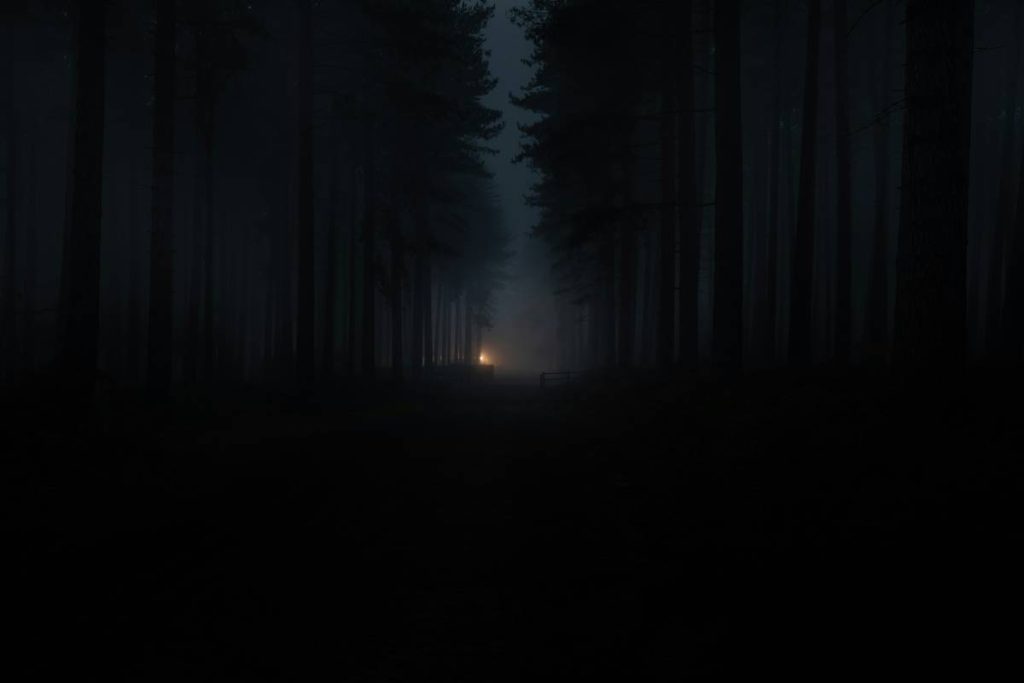
I remember playing PT (Playable Teaser) for the first time in 2014. No HUD. No inventory. Just an L-shaped hallway that reset with subtle, escalating changes—a phone ringing, a whispering fetus painting, a figure crawling backward. My palms sweated not from danger, but from the uncertainty. Was I imagining things? Had I missed a clue? That cognitive dissonance—that’s the sweet spot.
How Do These Games Actually Get Inside Your Head?
Why does psychological horror feel so personal?
Because it bypasses reflex fear (like jumping at a loud noise) and targets higher cognition. Studies in game studies journals (e.g., Game Studies, Vol. 21, 2021) confirm that players report stronger emotional retention after psychological horror experiences versus action-horror. Why? These games engage theory of mind—you’re constantly interpreting motives, questioning reality, and projecting your own anxieties onto sparse cues.
How do developers engineer unease without enemies?
Through three pillars:
- Environmental Storytelling: Notes, photos, and decaying interiors imply trauma without exposition (What happened here?).
- Sensory Deprivation/Overload: Flickering lights, muffled audio, or sudden silence trigger primal alertness.
- Player Complicity: Forcing moral ambiguity—like choosing to abandon a child in Detention—creates guilt that outlasts gameplay.
Optimist You: “Lean into the discomfort—it’s where the magic happens!”
Grumpy You: “Ugh, fine—but only if I can play with the lights on and a cat on my lap.”
5 Best Practices for Experiencing (or Creating) True Psychological Horror
Whether you’re a player wanting deeper immersion or a dev crafting your first horror prototype, these non-negotiables separate the unsettling from the forgettable:
- Embrace ambiguity. Never over-explain. Let players fill gaps with their worst fears.
- Subvert expectations quietly. A door that was locked is now open. A painting has changed. Small shifts > big reveals.
- Use sound as a psychological tool. Low-frequency drones (infrasound) can induce anxiety even if unheard consciously (verified in Journal of the Acoustical Society of America, 2018).
- Limit player agency strategically. Helplessness isn’t frustrating—it’s thematic. But balance it with moments of control to avoid disengagement.
- Avoid “terrible tip” #1: Don’t confuse trauma porn with psychological depth. Violence without emotional consequence is just shock, not horror.
Case Studies: When Psychological Horror Nailed It (and When It Didn’t)
Case Study 1: Silent Hill 2 (2001) – The Gold Standard
James Sunderland’s journey through a town shaped by his grief remains unmatched. The monster “Pyramid Head” wasn’t just scary—he was a manifestation of James’s guilt over his wife’s euthanasia. As Team Silent revealed in interviews, every environmental detail (hospital corridors, prison cells) mirrored James’s psyche. Result? Ranked #1 in IGN’s “Top 100 Horror Games” and still analyzed in university game design courses.
Case Study 2: Layers of Fear (2016) – Ambition vs. Execution
Bloober Team’s painter-on-the-brink narrative had strong bones—but relied too heavily on scripted jump scares, diluting its psychological core. Critics (including PC Gamer) noted: “The scares feel imposed, not unearthed.” Lesson? Don’t let cinematic flair override player-driven dread.
My Confessional Fail:
I once designed a prototype where the protagonist’s memories shifted each playthrough. Cool in theory—disastrous in practice. Players felt cheated, not intrigued. I forgot: psychological horror needs consistency within chaos. The rules may bend, but they must exist.
Rant Section:
Can we retire the “it was all a dream” ending? If your psychological horror collapses into a lazy twist (“You were dead the whole time!”), you’ve betrayed the player’s emotional investment. Real psychological horror respects the audience’s intelligence. *Mic drop.*
FAQs About the Psychological Horror Genre
Is psychological horror the same as paranormal horror?
No. Paranormal horror involves supernatural entities (ghosts, curses). Psychological horror may include them—but only as projections of mental states. In Alan Wake, are the Taken real, or manifestations of his writer’s block? That tension defines the genre.
Can psychological horror games cause real anxiety?
Potentially. A 2020 study in Cyberpsychology, Behavior, and Social Networking found that 34% of players reported lingering unease after immersive horror sessions. Know your limits—take breaks, play in daylight, and avoid if prone to anxiety disorders.
What’s the best entry point for newcomers?
Start with What Remains of Edith Finch (mild horror, heavy psychological themes) or Oxenfree (supernatural elements framed through teen psychology). Avoid diving straight into Madness: Project Nexus unless you enjoy sleepless nights.
Why do some psychological horror games feel “empty”?
Because they prioritize atmosphere over emotional truth. Dread without context is just mood lighting. The best entries tie horror to human vulnerability—grief, guilt, isolation.
Conclusion
The psychological horror genre endures not because it scares us—but because it sees us. It holds up a funhouse mirror to our deepest insecurities and says, “This could be real.” From Silent Hill 2’s guilt-ridden corridors to Signalis’s haunting blend of sci-fi and sorrow, these games succeed when they respect the player’s mind as both battleground and collaborator.
So next time you’re tiptoeing through a flickering hallway, remember: the real horror isn’t what’s chasing you. It’s what you’re willing to believe.
Like a 2003 AIM away message: “BRB—questioning reality after PT again.”